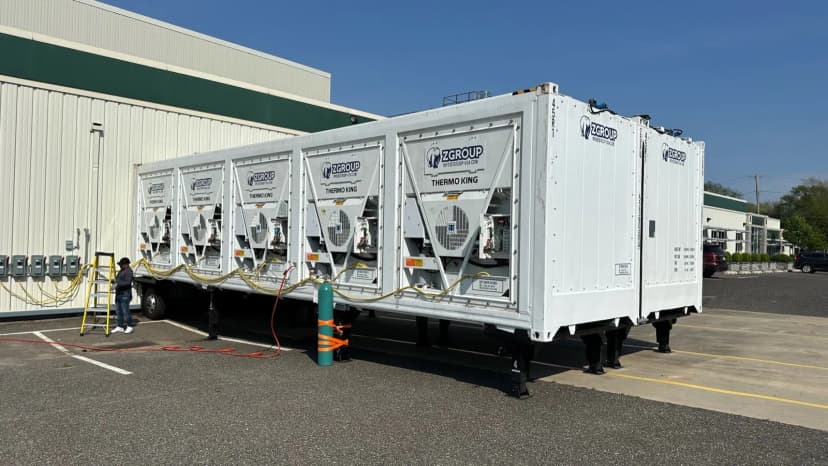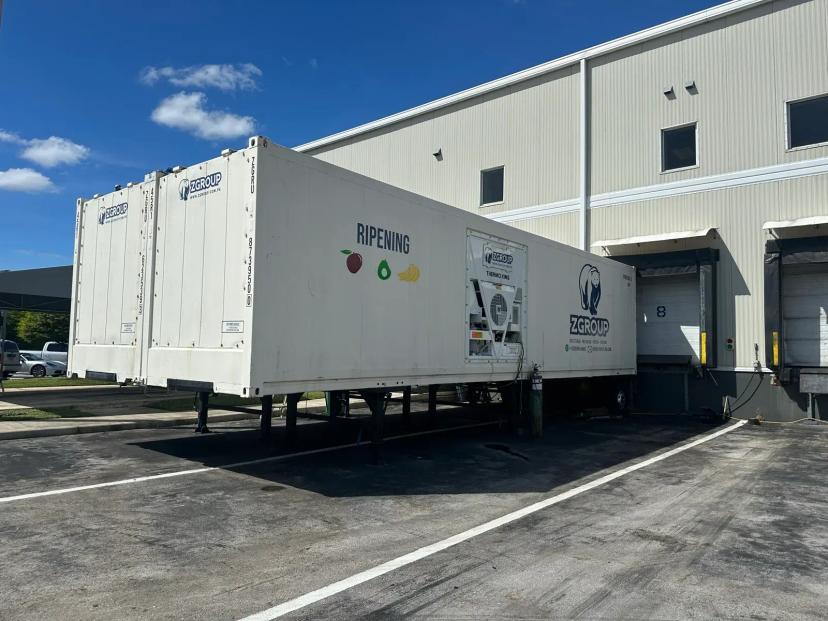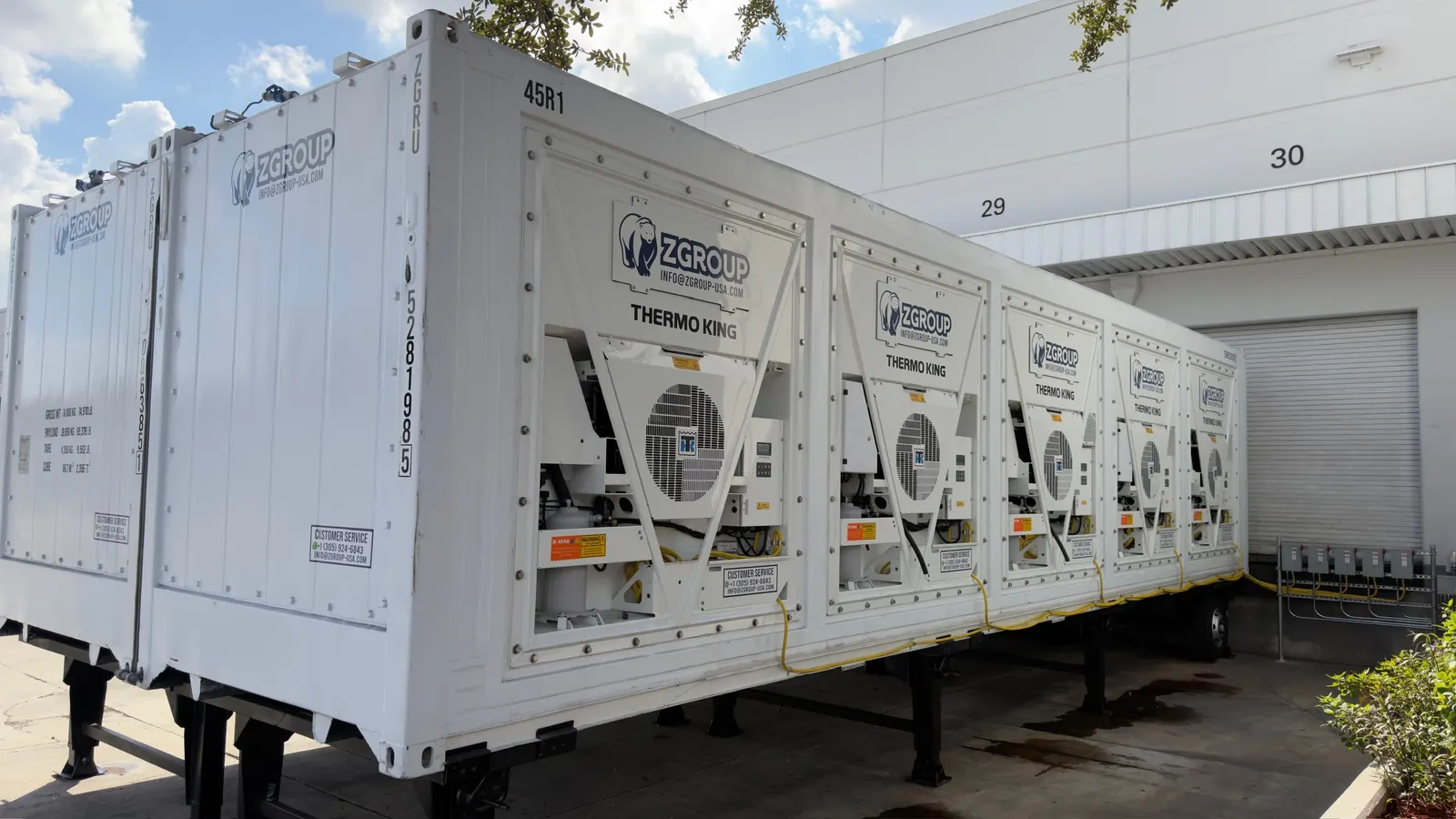
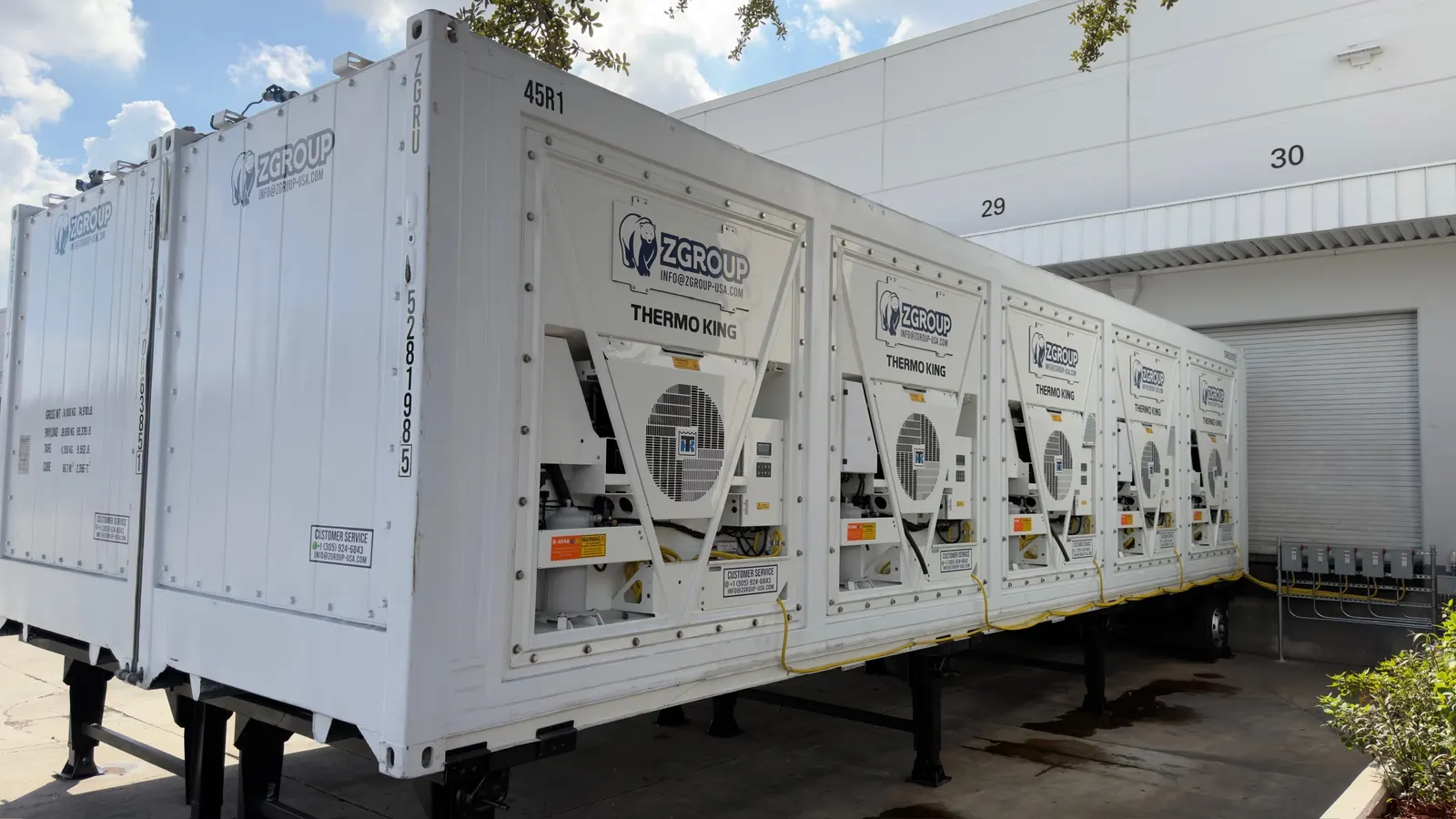
A Miami asparagus importer needed more post-fumigation cooling without giving up warehouse space. A ZGROUP pre-cooling unit outside, connected to the dock, now cools product on its way to the trucks.
In This Article
After fumigation, asparagus must be cooled fast before it ships. An asparagus importer in Miami, FL, USA needed more asparagus pre-cooling capacity. Building it inside the warehouse would have taken floor space the business needs for inventory. Instead, it bought a ZGROUP pre-cooling unit that sits outside and connects directly to the dock: product flows straight from treatment to cooling to trucks, and every square foot inside stays available for product.
The challenge
For an importer, the window after fumigation is tight. The product has to be cooled quickly before it goes back on the road, and any delay at that step holds up everything behind it.
The importer needed more cooling capacity at exactly that point in the flow. The obvious option was to build a pre-cooling room inside the warehouse. But for an importer, floor space is inventory: every square foot given to cooling equipment can no longer hold product, and holding product is what the business runs on. Building would also have meant a construction project, with the time and cost that come with it.
The solution
The importer bought a ZGROUP pre-cooling unit and placed it outside the building, connected directly to the dock. That placement is the key to the project: the warehouse keeps all of its storage space, and product moves from treatment to cooling to the trucks in one line, with no extra handling in between.
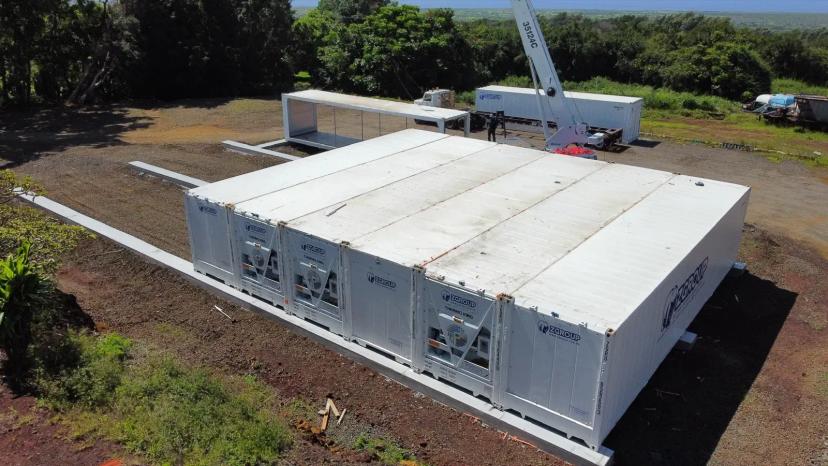
Because the unit is modular, it needed no permanent construction, and it can be moved and reinstalled at another site if the operation changes.
The results
- Fast post-fumigation cooling
- Outside the warehouse: no inventory space lost
- Dock-connected, straight to the trucks
Asparagus pre-cooling: why placement matters
When importers plan asparagus pre-cooling, most of the attention goes to capacity. Placement matters just as much. Inside the warehouse, a cooling room competes with inventory for floor space. Outside, at the dock, between treatment and shipping, it adds capacity without taking any space away, and cooling becomes part of the flow instead of an extra stop.
Things to consider when adding pre-cooling capacity:
- Where the bottleneck is. If product waits after treatment, that is where cooling capacity belongs.
- Inside or outside. If warehouse space holds inventory, a unit placed outside and connected to the dock adds cooling without giving up storage.
- Dock connection. A unit connected directly to the dock lets pallets roll from cooling to trucks without extra moves.
- Build vs. modular. ZGROUP units are delivered in under 60 days and installed in 2 to 5 days, with no civil works and minimal site prep.
- Control and monitoring. ZTRACK, ZGROUP's own control platform, runs each cycle and reports temperature and alarms remotely, so the team can follow it without standing next to the unit.
Rent or buy?
This importer chose to buy. Renting can suit operations that need capacity for a season or want to test a setup before committing. ZGROUP offers both, units carry a 5-year warranty, and refrigeration is by Thermo King.
Pre-cooling vs. cold storage
Pre-cooling and cold storage are often confused, but they do different jobs. A pre-cooling unit is built to pull heat out of product quickly. A cold storage room is built to hold product at a steady temperature once it has been cooled. An importer that needs faster turnaround after treatment is usually short on pre-cooling, not on storage.
Sizing for peak arrivals
Size cooling capacity for your busiest arrival days, not your average ones. Count the pallets that come out of treatment at peak and how quickly they need to be on a truck. Modular units can be added later if volumes grow.
It also pays to plan the dock around the unit. When pallets can roll from treatment into cooling and straight onto a waiting truck, the pre-cooling step adds capacity without adding moves, labor or staging space to the operation.
What is a pre-cooling unit?
A pre-cooling unit pulls heat out of produce fast, before it goes into storage or onto a truck. ZGROUP's pre-cooling unit is a containerized forced-air system designed by ZGROUP's engineering team. It runs on several refrigeration units that ZGROUP modifies and upgrades for high-capacity forced-air cooling. ZTRACK, ZGROUP's own control platform, replaces the units' original control software, so ZGROUP can push them to their full capacity and run each pre-cooling cycle precisely. The 2XL handles 10 pallets per unit and the 3XL 20, and units can run in parallel to add capacity. Because it is containerized, it connects at a dock with no construction.
See the pre-cooling tunnel, or more cold storage projects in Florida.
Is it right for your operation?
If cooling after treatment is slowing your dock, a pre-cooling unit connected where the product already flows may be the fastest fix. See the Pre-cooling tunnel, or talk to our team about your volumes and dock layout.
Frequently asked questions
Why does asparagus need pre-cooling after fumigation?
After fumigation, asparagus must be cooled fast before it ships. A pre-cooling unit at the dock handles that step without holding up the flow to the trucks.
Why put a pre-cooling unit outside the warehouse?
Inside, a cooling room takes floor space that would otherwise hold inventory. A containerized unit placed outside and connected to the dock adds cooling capacity while the warehouse keeps all of its storage space.
Can a pre-cooling unit connect to an existing dock?
Yes. ZGROUP pre-cooling units sit outside the building and connect directly to a dock, so product moves from treatment to cooling to trucks without extra handling and without using warehouse space.
How long does it take to add modular pre-cooling capacity?
ZGROUP units are delivered in under 60 days and installed in 2 to 5 days, with no civil works or permanent construction.
How many pallets does a pre-cooling unit handle?
ZGROUP's pre-cooling unit handles 10 pallets (2XL) or 20 pallets (3XL) per unit, and units can run in parallel to add capacity.